E-Stop Safety Standards: Have You Chosen the Right One?
1. An E-Stop Is Not Just a Button, but the Last Line of Defense in the Safety Chain
In CNC machinery, automation equipment, and production line integration environments, the emergency stop button (E-Stop) is often treated as a standard accessory. However, what truly affects safety is never simply whether it is installed, but whether it is selected correctly and wired correctly. When fixture abnormalities, tool collisions, unintended mechanical motion, or personnel entering hazardous areas occur, the E-Stop must stop dangerous motion in the shortest possible time and prevent the equipment from automatically resetting before confirmation. For equipment manufacturers and buyers, if the E-Stop unit itself, contact configuration, or safety circuit design does not comply with applicable standards, the consequences may range from inspection delays and export barriers to the loss of the final protective barrier when an accident occurs.
2. What Are the Basic Safety Requirements for an E-Stop?
According to the core principles of ISO 13850 and IEC 60204-1, an E-Stop must meet three major requirements: clear identification, immediate operability, and manual reset. The most common design requirements include a red mushroom-head button with a yellow background, allowing operators to identify it quickly under stressful conditions; once pressed, it must maintain the stop state and must not be automatically released due to power restoration or changes in control signals; the reset method should require a manual action such as twist release or pull release to avoid unintended resetting. These requirements may appear basic, but they directly affect whether equipment can pass CE verification, whether on-site misuse can be avoided, and whether maintenance personnel can troubleshoot safely after shutdown.
3. Critical Details That Must Not Be Overlooked in Procurement and Design
In addition to appearance and operating method, IEC 60947-5-5 places greater emphasis on the safety characteristics of E-Stop contacts, especially positive opening and forced disconnection capability. This means that when the button is actuated, normally closed contacts can be reliably opened mechanically rather than relying solely on spring return, reducing the risk of failure caused by contact welding or sticking. For machinery and equipment manufacturers in Taiwan, if their equipment is intended for Europe or other high-specification markets, the E-Stop usually must also be integrated with a safety relay or safety control module to form a safety circuit compliant with Category 4 or PL e. In other words, it is not enough for a single button to meet specifications; the entire safety chain, from the button, wiring, and modules to the output shutdown logic, must be consistent.
4. The Three Most Common Selection Mistakes in the Field
- Focusing only on appearance without verifying contact specifications. Many products on the market look similar to an E-Stop, but if they do not offer positive opening, dual contacts, or relevant test data, they may not actually be suitable as a safety shutdown device.
- Connecting the E-Stop directly to a standard control circuit without using a safety relay. This approach may work for ordinary stopping, but it cannot satisfy higher safety level requirements and is unlikely to pass formal verification.
- Ignoring the installation environment. If the equipment operates in conditions involving cutting fluid, dust, high humidity, high vibration, or outdoor exposure, the button's dustproof and waterproof rating, wiring stability, and mechanical durability must all be evaluated. Otherwise, the on-site failure rate will be far higher than expected.
5. Practical Selection Recommendations for CNC and Automation Equipment
For CNC machine builders and automation equipment buyers, it is recommended to evaluate E-Stops from three perspectives. First, confirm whether the safety documentation is complete, including contact specifications, test basis, protection rating, and third-party reports. Second, confirm whether it can be integrated with the existing control architecture, such as safety relays, I/O modules, warning lights, and operator panel layout. Third, assess the convenience of future maintenance, including whether the wiring is clear, whether replacement is easy, and whether the panel layout can reduce the risk of accidental pressing and miswiring. If the equipment is a custom-built machine or an export machine, the E-Stop should be included in the overall machine safety planning from the design stage rather than added as reinforcement only before final inspection.
6. How YEU-LIAN Helps Equipment Builders Balance Safety Compliance and Integration Efficiency
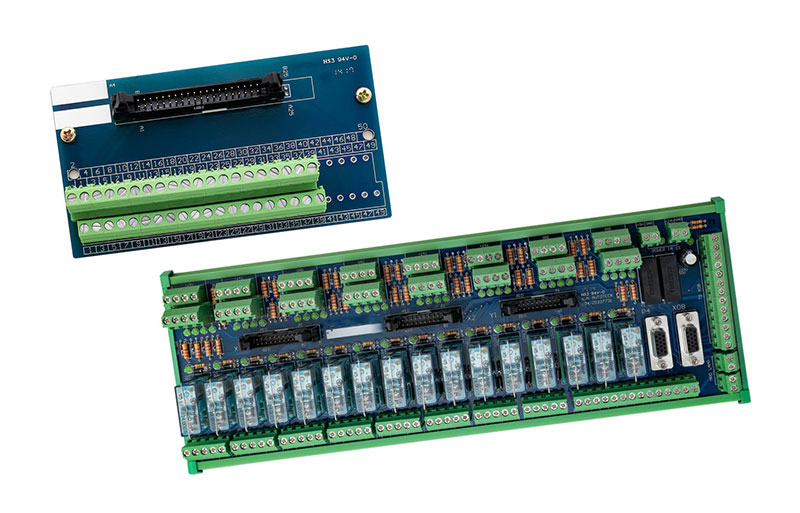
YEU-LIAN has long specialized in machine tool electrical control and automation control. In addition to providing operator interfaces, I/O relay modules, industrial warning lights, and customized control panels, YEU-LIAN can also assist in integrating E-Stop-related configurations based on specific equipment applications. For equipment builders seeking to shorten wiring time, reduce assembly errors, and improve maintenance efficiency, integrating the E-Stop, handwheel, selector switch, and other control components into the operator panel is often a more effective way to establish a consistent, clear, and verifiable safety architecture than purchasing them separately. This type of integration is especially suitable for CNC machinery, retrofit and upgrade projects, and OEM/ODM equipment that must also ensure compatibility.
7. Conclusion: Choosing the Right E-Stop Is the Real Way to Reduce Risk
The value of an E-Stop does not lie in adding one more button, but in whether it can reliably stop the equipment and give personnel enough time to move out of danger when a hazardous event occurs. For manufacturers, this is not only a matter of regulatory compliance, but also one of downtime cost, brand trust, and customer acceptance quality. If you are planning the safety circuit for CNC machinery or automation equipment, it is recommended to review safety requirements, environmental conditions, and overall control integration in parallel. YEU-LIAN can help evaluate more suitable operator panel and industrial control integration solutions based on actual application needs, so that industrial safety is not limited to written specifications, but is truly implemented on the equipment site.