Special Requirements of Woodworking and Stone Machinery: Dust Protection Is Critical
1. Dusty Environments Are Not a Minor Issue, but a Watershed for Equipment Stability
For woodworking and stone machinery, dust is not merely a housekeeping issue. It is a critical factor that directly affects equipment uptime, maintenance frequency, and delivery schedule stability. Common CNC woodworking routers, edge banding and panel sizing equipment used in furniture factories, as well as cutting, grinding, and polishing machines in stone processing plants, almost all operate for long periods under high-concentration dust conditions. When dust continuously enters the operator panel, electrical control cabinet, or wiring area, common consequences include button malfunction, contact oxidation, poor heat dissipation, false signals, and unexpected shutdowns. For purchasing and equipment management personnel, what truly needs to be evaluated is not just the one-time procurement cost, but whether the machine can reliably withstand high-load and highly contaminated on-site environments.
2. Woodworking and Stone Machinery Have Different Dust Characteristics, So Their Protection Logic Must Also Differ
Woodworking machinery generates wood chips, fibers, and fine wood dust during processing. Dust produced from hardwood cutting is finer, making it more likely to remain airborne and enter the control system through panel gaps, fan air inlets, or wiring holes. Although softwood particles are generally larger, they accumulate quickly, easily blocking heat dissipation paths and adhering around terminal blocks. When combined with oil mist, adhesives, or ambient moisture, dust is even more likely to stick to the surfaces of electrical components, increasing the difficulty of cleaning and maintenance.
Conditions for stone machinery are usually more demanding. Processing granite, marble, and engineered stone generates high-hardness particulates. When combined with water-cooled cutting, the mixture of dust and moisture forms fine slurry that more easily penetrates dead corners inside enclosures, clogs filters, and may even affect insulation performance. Such environments test not only dust protection, but also splash resistance, the durability of sealing materials, and the convenience of subsequent maintenance. Therefore, the required dust protection rating is often higher than that of general machinery.
3. Choosing the Right Dust Protection Rating Requires More Than Looking at Specification Numbers
In equipment selection, the IP protection rating is the most basic reference point. For woodworking machinery, if there are only general wood chips and routine cleaning requirements, control components should generally be evaluated starting from IP54. If the processing dust is fine, the equipment requires frequent wiping, or it is installed near areas with incomplete dust collection, IP65 is more appropriate. For stone machinery, considering fine dust, water mist, and cleaning scenarios, control panels and critical enclosures should typically start at IP65 or above, while areas with intensive splashing or localized moisture require even higher protection specifications.
In practice, however, dust protection performance cannot be judged solely by the marked rating. The overall structure must also genuinely implement the required protection. For example, whether the panel frame has a complete gasket, whether cable entries use dustproof connectors, whether the thermal design balances filtration with maintenance convenience, and whether the cabinet door and mounting holes maintain sufficient compression precision. If only a single component meets the standard, the entire system may still lose its protective effectiveness because of the weakest gap.
4. How YEU-LIAN Responds to High-Dust Equipment Environments
To address the application requirements of woodworking and stone machinery, YEU-LIAN draws on its experience in control interfaces and electrical control integration to provide dust protection solutions that are better aligned with real-world site conditions. First, for CNC operator panels, sealed buttons, membrane, or touch structures can be planned according to machine operating scenarios, combined with easy-to-clean surface materials to reduce the likelihood of wood dust and stone dust becoming trapped in panel joints. Second, in electrical control cabinet integration, cabinet cutouts, wiring entries, door sealing, filter replacement, and heat dissipation paths are evaluated together to avoid emphasizing sealing alone while overlooking the thermal stability required for long-term operation.
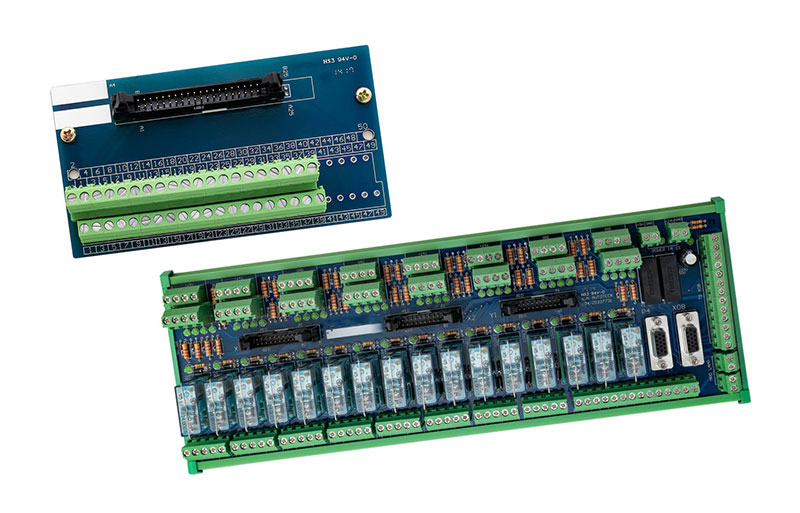
In addition, peripheral components such as relay modules, terminal blocks, and indicator lights should also be selected to more suitable industrial specifications if they are located in dust-exposed areas. For equipment manufacturers and purchasing personnel, the value of this approach lies in integrating the consideration of panels, enclosures, wiring, and signal indication, thereby reducing the risk of incompatibility caused by separate component selection. This is beneficial for both new machine design and existing machine upgrades.
5. The Real Return of Dustproof Design Lies in Reducing Downtime and Maintenance Costs
Failures in high-dust environments are often not one-time major issues, but repeated minor abnormalities that accumulate into production line losses. Today it may be poor button contact; tomorrow it may be loose terminals, clogged fans, or excessive temperature rise inside the enclosure, eventually developing into downtime for repair and scheduling delays. By contrast, thoroughly planning the dust protection rating, panel structure, and electrical control cabinet sealing from the outset usually reduces maintenance frequency and also helps extend component service life.
For CNC machinery manufacturers and automation equipment purchasers, the key selection criterion for woodworking and stone machinery should not stop at whether the functions are usable. It should further confirm whether the equipment is suitable for long-term operation in dusty on-site environments. With many years of experience in industrial control interfaces and electrical control integration, YEU-LIAN can help customers plan more appropriate dust protection ratings and control solutions based on processing type, installation location, and maintenance method, enabling equipment to remain stable, easy to maintain, and more cost-effective overall even in harsh environments.