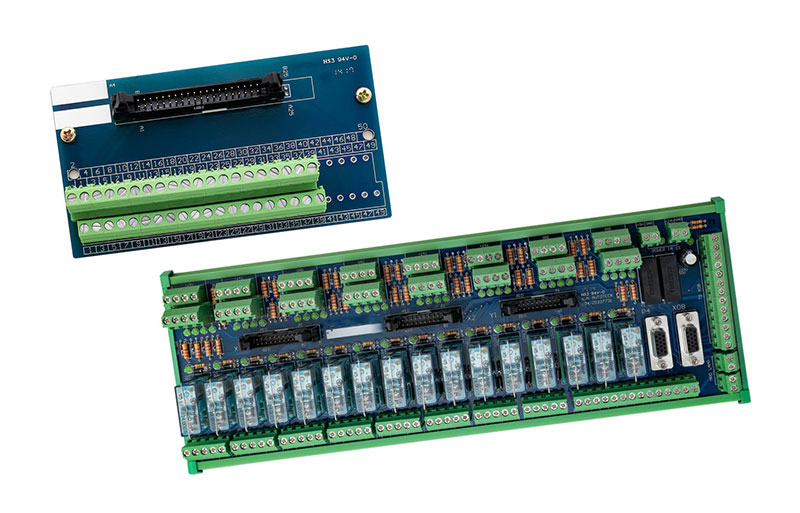
YEU-LIAN ISO Certification Process and Quality Assurance
1. Quality Is Not a Slogan, but an Executable System
For CNC machinery manufacturers and automation equipment procurement personnel, circuit board quality affects not only product yield, but also directly impacts equipment stability, delivery schedules, and subsequent maintenance costs. Since entering the industrial electrical control field in 1989, YEU-LIAN has consistently regarded quality management as a core capability. Based on the ISO 9001 quality management system, it has established standardized procedures from raw materials and manufacturing processes to final shipment. This means quality does not depend on individual experience, but is ensured through documentation, records, audits, and continuous improvement mechanisms, so that every batch of customized control boards, CNC operator panels, and I/O modules is produced under consistent standards.
2. The Real Significance of ISO 9001 to YEU-LIAN
Many people regard ISO certification as merely a certificate, but for YEU-LIAN, ISO 9001 is more like the management backbone of daily operations. Its core value lies not only in complete documentation, but also in requiring the company to stay customer-focused and drive continuous improvement through the PDCA cycle. From design review, supplier management, and process control to nonconforming product handling and customer complaint response, every step must leave traceable records and be subject to regular third-party audits to verify actual implementation. For procurement teams and equipment integrators, this means supplier quality stability is not just a verbal commitment, but is supported by a formal system, annual verification, and corrective action mechanisms for abnormalities.
3. Seven Major Quality Control Checkpoints from Incoming Materials to Shipment
- IQC Incoming Inspection: Use AQL sampling to inspect appearance, specifications, and critical functions. Key components require suppliers to provide lot quality data to prevent defective materials from entering the production line.
- FAI First Article Inspection: For each new work order batch, the first article is checked for dimensions, appearance, and function. Mass production begins only after confirming consistent drawing interpretation, fixture setup, and process conditions.
- IPQC In-Process Inspection: Conduct mid-process monitoring of solder paste printing, placement accuracy, reflow soldering conditions, and manual soldering quality. If abnormalities occur, the line is stopped immediately and root cause analysis is initiated.
- AOI Automated Optical Inspection: Use image comparison to quickly identify missing components, polarity errors, misalignment, and solder bridging, shortening issue detection time and reducing SMT process risk.
- Functional Testing: Use dedicated fixtures and test programs based on product type to verify whether I/O signals, relay operation, LED driving, and communication behavior meet design requirements.
- Burn-in Testing: For high-reliability products, perform continuous power-on and simulated operation testing to expose early failure risks in advance, followed by retesting before release.
- OQC Outgoing Inspection: Verify model number, quantity, appearance, accessories, and packaging labels to ensure delivery contents match the order and reduce receiving and installation errors on site.
4. Customized Projects Require Traceable Quality Control Processes Even More
One of YEU-LIAN’s strengths lies in its ability to provide customized solutions for different machine types, control interfaces, and wiring requirements. Without standardized procedures, such projects are most likely to show gaps during mass production transfer or on-site installation. Therefore, before mass production, YEU-LIAN conducts design reviews and confirms validation plans to clearly define test methods and acceptance criteria. Before production starts, it further confirms that fixtures, documentation, and parameters are all ready. Each board and each panel can also be linked to its production batch, incoming material lot number, inspection results, and shipment records. When customers encounter abnormalities, the cause can be traced more quickly, reducing downtime and communication time.
5. Continuous Improvement Is the Complete Closed Loop of Quality Management
A mature quality control process does not end at shipment. YEU-LIAN incorporates customer feedback, repair records, and quality abnormalities into its analysis, using 8D and PDCA mechanisms to identify root causes and feed improvements back into design, procurement, and manufacturing processes. For equipment procurement personnel, choosing a supplier with ISO-based management thinking means not only purchasing a usable circuit board, but also reducing uncertainty in future maintenance, improving implementation efficiency, and building long-term supply stability. YEU-LIAN believes that truly trustworthy quality comes from every visible and invisible checkpoint along the way.