Key Features of Easy-to-Clean Panels for Food Packaging Machinery
1. Hygiene Requirements for Food Machinery Are Rapidly Upgrading
In the field of food packaging machinery, hygiene and safety are no longer optional features, but core factors that directly affect product quality, customer audit results, and brand trust. For CNC machinery manufacturers and automation equipment procurement personnel, whether equipment incorporates a well-designed easy-to-clean structure often determines whether it can be smoothly introduced into food production lines, shorten validation time, and reduce cleaning-related downtime costs. This is especially critical in scenarios involving frequent washdowns, powder processing, sugary liquid filling, and allergen product changeovers, where the cleanability of the operator panel must not be overlooked.
2. HACCP, GMP, and EHEDG Requirements for Panel Design
Food machinery often needs to comply with HACCP, GMP, FDA-related requirements, as well as the hygienic design principles commonly seen in the European market under EHEDG. Although each standard has its own focus, their common core points to several principles: surfaces must be easy to clean, resistant to dirt accumulation, free from contamination traps, and made of materials that can withstand detergents, disinfectants, and frequent washdowns. If an operator panel has excessive seams, button openings, or aged gasket areas, it not only increases the risk of microbial residue, but may also be identified as a deficiency during customer factory inspections, export reviews, or third-party audits.
3. Why Traditional Panels Easily Become Hygiene Weak Points
Traditional operator panels often use separated pushbuttons, indicator lights, and recessed structures. While the surface may appear intact, syrup, grease, flour, spice dust, and cleaning liquid residue can easily accumulate around buttons, corner transitions, and seams. If these contaminants are not thoroughly removed, they can become breeding grounds for bacteria and mold. More seriously, if liquid penetrates the interior through button openings or gaps, it may cause moisture-related corrosion of I/O modules, relays, and wiring terminals, further leading to equipment failure and hygiene risks while increasing maintenance and production line stoppage costs.
4. What Conditions a Truly Easy-to-Clean Panel Should Meet
- Full-flat design: Reduces button height differences and cutout structures to minimize the chance of dirt adhesion.
- Dead-angle-free appearance: Rounded edge transitions help prevent water accumulation and dirt retention in sharp corners.
- Food-grade materials: Uses materials compliant with NSF or FDA requirements to ensure both safety and durability.
- High-protection sealing: Withstands high-temperature, high-pressure, and high-humidity cleaning environments to reduce the risk of internal contamination.
For food machinery manufacturers, easy-to-clean design is not merely about a flat appearance. It requires consideration of materials, sealing, module integration, and daily maintenance procedures as a whole. Only by moving hygienic design forward into the mechanical structure and electrical control planning stage can equipment usability and market competitiveness truly be improved.
5. Practical Benefits Brought by Easy-to-Clean Panels
YEU-LIAN easy-to-clean panel series features a high protection rating, ultra-smooth surface treatment, fully sealed rear modules, and chemical resistance, making it suitable for the clean-in-place procedures commonly used in food production lines. In one beverage packaging plant, for example, daily cleaning time was reduced from 45 minutes to approximately 8 to 12 minutes after implementation, while the pass rate for microbiological testing improved from 92% to 99.8%, helping the facility pass HACCP and BRC audits. In another bakery plant, improvements to flour and powdered sugar residue issues reduced cleaning validation time per shift from 30 minutes to 10 minutes and increased production line utilization by 11%.
6. Extending from the Panel to Overall Electrical Control Cabinet Integration
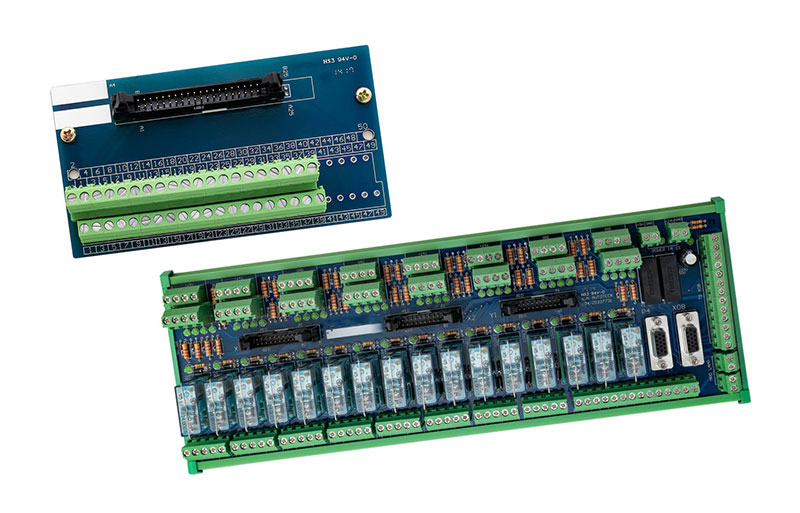
Upgrading the panel alone is not enough to achieve complete hygienic design. If the electrical control cabinet itself, the sealing structure, and the internal modules still use general industrial specifications, the overall cleaning performance and reliability will remain limited. YEU-LIAN can provide food-grade integrated solutions, including 304 or 316 stainless steel enclosures, food-grade silicone gaskets, integrated I/O modules, relay modules, and industrial LED warning lights, helping equipment manufacturers balance hygiene, protection, and maintenance convenience within limited space while establishing a more complete one-stop food machinery control solution.
7. Conclusion: Easy-to-Clean Design Is Now a Basic Requirement for Food Equipment
In the face of increasingly stringent food safety requirements, easy-to-clean panels have shifted from a value-added option to a basic requirement in food machinery design. For CNC machinery manufacturers and automation equipment procurement personnel, selecting operator panels with a full-flat design, dead-angle-free construction, food-grade materials, and high-protection sealing capabilities not only helps reduce cross-contamination and cleaning burden, but also improves equipment stability, audit pass rates, and overall production line efficiency. When combined with stainless steel electrical control cabinets and complete module integration, such solutions are even better positioned to meet market expectations for highly hygienic and highly reliable food packaging equipment.