Military-Grade Connectors vs. Standard Aviation Connectors: An Analysis
1. Why Connectors Are a Critical Link in Industrial Equipment
In CNC machine tools, automated production lines, and various electrical control systems, connectors are not merely simple wiring components, but the final checkpoint that determines whether power, control signals, and communication data can be transmitted reliably. For procurement and equipment design personnel, inaccurate connector selection often leads to poor contact, false downtime alarms, difficult maintenance and disassembly, or even full-line abnormalities caused by oil contamination, moisture, or vibration. Industrial sites in particular operate for long periods and must withstand high temperatures, high humidity, dust, cutting fluid, and electromagnetic interference, making connector reliability often more important than specifications on paper.
2. Key Design Priorities of Military-Grade Connectors
Military-grade connectors are largely derived from U.S. Department of Defense specifications, such as the widely used MIL-DTL-38999 series. These connectors are designed to maintain stable connections under harsh conditions, and therefore typically offer higher mechanical strength, superior locking structures, better vibration resistance, and more comprehensive shielding designs. For heavy-cutting CNC machine tools, outdoor control cabinets, marine equipment, or automation systems requiring 24-hour continuous operation, military-grade connectors can effectively reduce the risks of loosening, moisture ingress, and signal interference.
3. Where Standard Aviation Connectors Offer Advantages
Standard aviation connectors are commonly found in products compliant with standards such as ARINC, EN 4165, or MIL-C-26482. Their design logic places greater emphasis on high density, lightweight construction, and ease of configuration. These connectors typically allow more contacts to be arranged within a smaller space and are also better suited for high-speed signals or the integration of multiple control signals. As a result, they are often used in semiconductor equipment, medical equipment, test fixtures, robotic arms, and lightweight AGVs. If equipment design prioritizes wiring efficiency, space utilization, and modular installation, standard aviation connectors are often a more flexible choice.
4. Practical Comparison Between Military-Grade and Aviation Connectors
- Mechanical strength: Military-grade connectors generally feature more robust housings, locking mechanisms, and anti-vibration designs, making them suitable for high-vibration and high-impact environments.
- Waterproofing and environmental resistance: Military-grade connectors typically deliver better performance in dustproofing, waterproofing, salt spray resistance, chemical corrosion resistance, and wide temperature range tolerance.
- Density and weight: Standard aviation connectors are more likely to balance high-density contact arrangements with lower weight, making them suitable for equipment with limited space.
- Cost and maintenance: In some applications, standard aviation connectors offer a more favorable cost structure, and when environmental conditions are not extreme, they can provide better overall procurement value.
- Mating cycle life and reliability: Military-grade connectors are generally better suited for long-term repeated mating and unmating and for high-reliability requirements, but proper termination and installation remain essential.
5. What Criteria Should Be Considered in Procurement and Selection
If equipment operates in environments with heavy dust, oil contamination, and vibration, or where downtime costs are extremely high, prioritizing military-grade connectors is the safer choice. If the equipment requires compact sizing, high signal integration, limited space, and a relatively controlled environment, then standard aviation connectors can better balance configuration efficiency and cost. In practice, selection should not be based on a single part number alone. Cable specifications, I/O modules, control boards, shielding and grounding, and control cabinet layout must also be evaluated together to fully realize connector performance.
6. The Integrated Value of YEU-LIAN
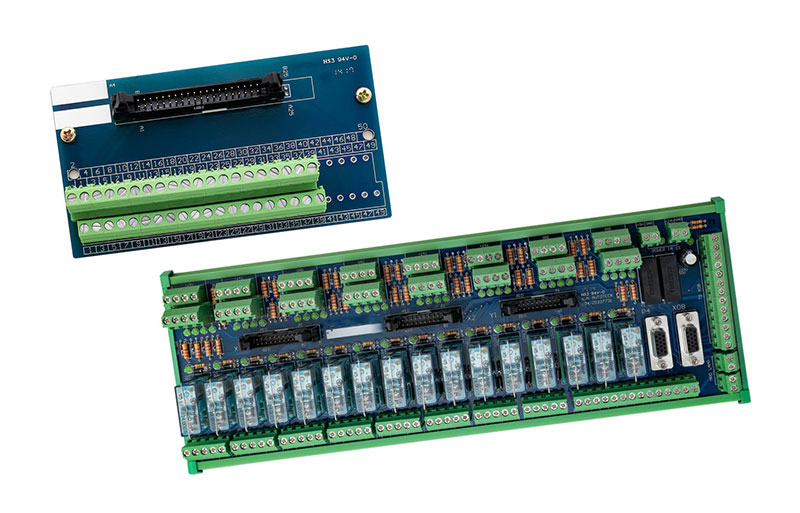
YEU-LIAN can provide integrated planning for military-grade connectors and standard aviation connectors based on the needs of CNC machinery manufacturers and automation equipment customers, including customized adapter boards, I/O module matching, control board interface integration, and electrical control cabinet contract manufacturing and configuration. For procurement teams, this is not merely component supply. It also reduces the burden of compatibility verification, wiring adaptation, and subsequent maintenance management, ensuring greater stability and reliability throughout equipment shipment, installation, and long-term operation.