Employee Interview: A YEU-LIAN Senior Engineer on Soldering
1. The Most Overlooked Yet Most Critical Process Details
In procurement decisions for CNC machinery and automation equipment, many buyers prioritize controller performance, I/O count, communication interfaces, and system integration capabilities. However, what truly affects the long-term stable operation of equipment is often the more fundamental and easily overlooked soldering process. At YEU-LIAN, whether a control board is reliable depends not only on its design and component selection, but also on whether every solder joint is stable, uniform, and capable of withstanding vibration, temperature rise, and continuous operation over the long term. This is why we have always regarded soldering as a core element of quality.
2. The Accumulation of 35 Years of Shop-Floor Soldering Experience
Master Chen joined YEU-LIAN in 1989 and progressed from a hand-soldering apprentice to a senior engineer, witnessing the full evolution of electronics manufacturing from leaded solder and manual through-hole insertion to lead-free processes, SMT automated placement, AOI automated optical inspection, and 3D X-ray inspection. Equipment has continued to advance, and process management has become more data-driven, but he has always believed that the real difference lies not in how many new machines are used, but in whether on-site personnel truly understand the process logic behind material properties, temperature control, and solder joint evaluation. This frontline judgment is precisely the irreplaceable value behind high-reliability products.
3. Implementing Every Soldering Step to High-Reliability Standards
All soldering operations at YEU-LIAN are carried out in accordance with IPC-A-610 Class 3 standards, which impose stringent requirements for high-reliability electronic assemblies and are commonly applied in industrial control, medical, transportation, and other applications where failure is not acceptable. Clear acceptance criteria are defined for solder wetting, solder volume distribution, and fillet appearance, as well as for eliminating defects such as cold joints, insufficient solder joints, and bridging. For high-density components such as BGAs and QFNs, 3D X-ray inspection is further used to verify internal solder joint conditions, followed by AOI for appearance comparison, and finally reinspection by engineering personnel. For procurement teams and equipment integrators, this means the product not only passes outgoing inspection, but also delivers the process consistency required for long-term stable operation.
4. The Quality Management Logic Behind Daily Operations
Master Chen's daily work is not simply repetitive soldering, but the continuous calibration of quality under different process conditions. Before the day begins, he first checks the stencil condition of the SMT line, solder paste storage conditions, and printing thickness, and confirms whether the reflow oven temperature profile matches the requirements of the PCB material and components. After noon, he often handles BGA rework, which demands extremely high standards for heating uniformity, disassembly and reassembly timing, and solder ball reconstruction quality. In the afternoon, he conducts sampling inspections for wave soldering and selective soldering to ensure that variations in material batches and ambient temperature and humidity have not caused abnormalities. Before the end of the workday, he also discusses the day's cases with younger technicians, turning experience into repeatable evaluation standards.
5. Craftsmanship Is Not a Slogan, but Getting It Right the First Time
The phrase Master Chen most often reminds the team of is: "Get it right the first time. Never rework." This is not only a work attitude, but also the most practical view of cost in industrial manufacturing. For CNC machinery manufacturers and automation equipment suppliers, if any control board develops poor contact performance at the customer site, it may lead to downtime, maintenance labor, and even impact the delivery schedule of the entire production line. For this reason, YEU-LIAN has established a clear consensus in its soldering workshop: if there is any concern about a solder joint, the line is stopped immediately for confirmation. Problems are not passed to the next station, and risks are certainly not passed to the customer. At the same time, through weekly rework training and hands-on manual touch-up practice, tactile skill, temperature control, and defect identification experience are steadily passed on to the next generation of technicians.
6. How Soldering Quality Translates into Customer Trust
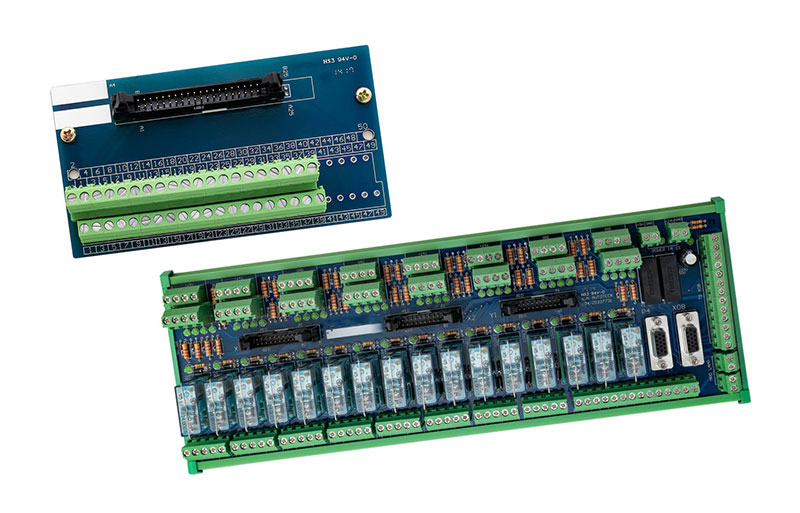
Stable soldering processes must ultimately be reflected in verifiable product performance. In recent years, YEU-LIAN has consistently maintained its soldering defect rate below 0.03%. After actual deployment in I/O modules and relay modules, the customer-side field repair rate over three years has also remained at an extremely low level. For equipment procurement units, this difference means lower maintenance costs, reduced downtime risk, and greater confidence in complete machine delivery. Especially in industrial environments that require long periods of continuous operation, have limited electrical control space, or present harsher site conditions, solder joint quality is often the key factor that determines system life and reliability.
7. Under Automation Upgrades, Manual Experience Remains Irreplaceable
In response to the trends of Industry 4.0 and smart manufacturing, YEU-LIAN continues to introduce automation equipment and inspection technologies. At the same time, we clearly understand that critical judgment in soldering processes will not be completely replaced by machines. Standardized mass production can be handled by automated production lines, but when it comes to complex rework, touch-up soldering at special angles, abnormal pattern analysis, and rapid response, the experience of senior engineers is still essential. This is also why YEU-LIAN continues to accumulate process know-how and place strong emphasis on talent development. For customers, what we deliver is not just products, but a trusted quality mindset and manufacturing discipline.